Grounded in child-development research Excellent 4.8 644 reviews

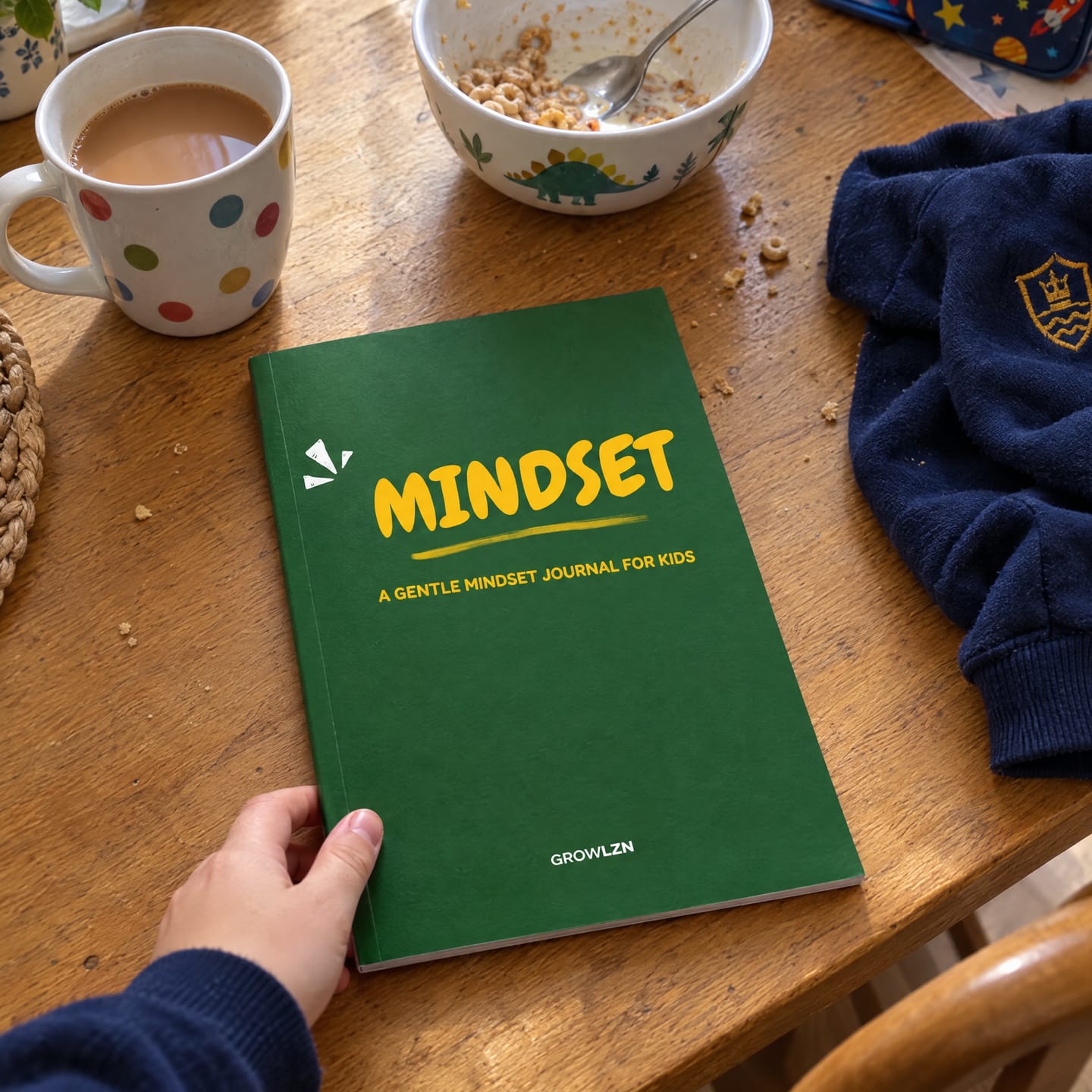
The Mindset Journal for kids

NEW: 🏆 2026 PARENT-LOVED MINDSET JOURNAL FOR KIDS

£29.99

Turn “I can’t” into “I’ll try” in 10 minutes a day.

  • Real self-belief, one small win a day
  • Names big feelings before they boil over
  • Mostly drawing, barely any writing
  • 10 minutes, zero screens
  • Gets them talking, not just “fine”
  • No prep. Start tonight.
Choose your bundleFree gifts auto-added

Add to your order Gifts unlock as you add journals

  • 30-day returns
  • Secure checkout
  • FREE UK delivery
  • Parent-Child Approved
  • American Express
  • Apple Pay
  • Google Pay
  • Klarna
  • Mastercard
  • PayPal
  • Shop Pay
  • Visa
Tania A.Loox review
5.0 out of 5 stars26 Oct 2026

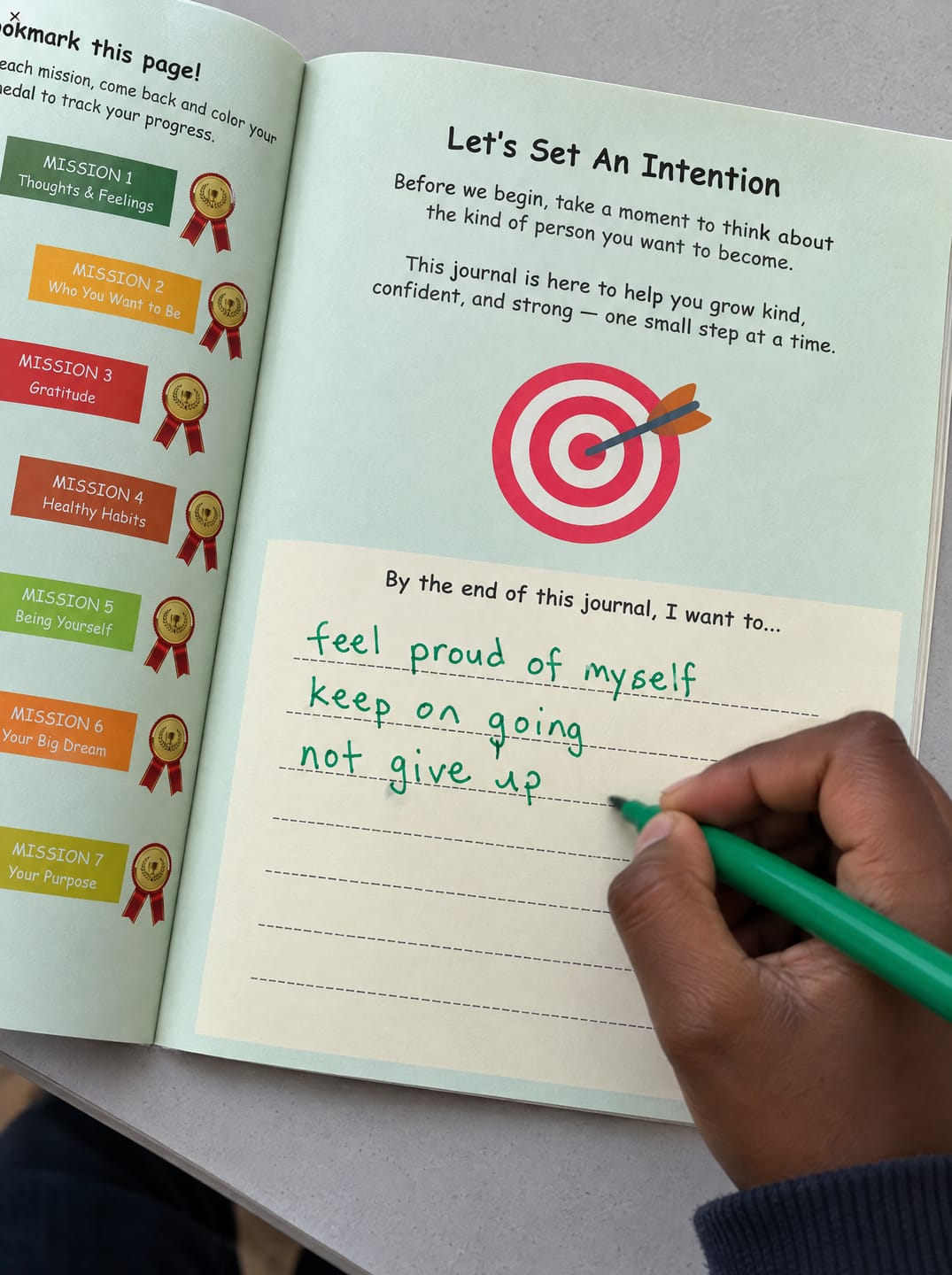
The intention page is amazing honestly. Its really good for getting my son to be more purposeful instead of just going through the motions everyday

Tania A. Collected by Loox
Read all 644 reviews

In stock · Order today, get it by Thu 12 Nov UK

  1. OrderedWed 4 Nov
  2. Dispatchedby Fri 6 Nov
  3. DeliveredThu 12 Nov

Standard FREE · 5–6 working daysExpress £8.99 · 1–2 working days

Tell me about:

The science behind every page

Children praised for their effort, not for being clever, chose harder challenges, kept going longer and enjoyed it more.

Mueller & Dweck (1998) · Journal of Personality and Social Psychology, the study behind “growth mindset”

How the journal turns it into a habit

  • Effort, not marks. Every mission celebrates trying, so “I can’t” becomes “I’ll try”.
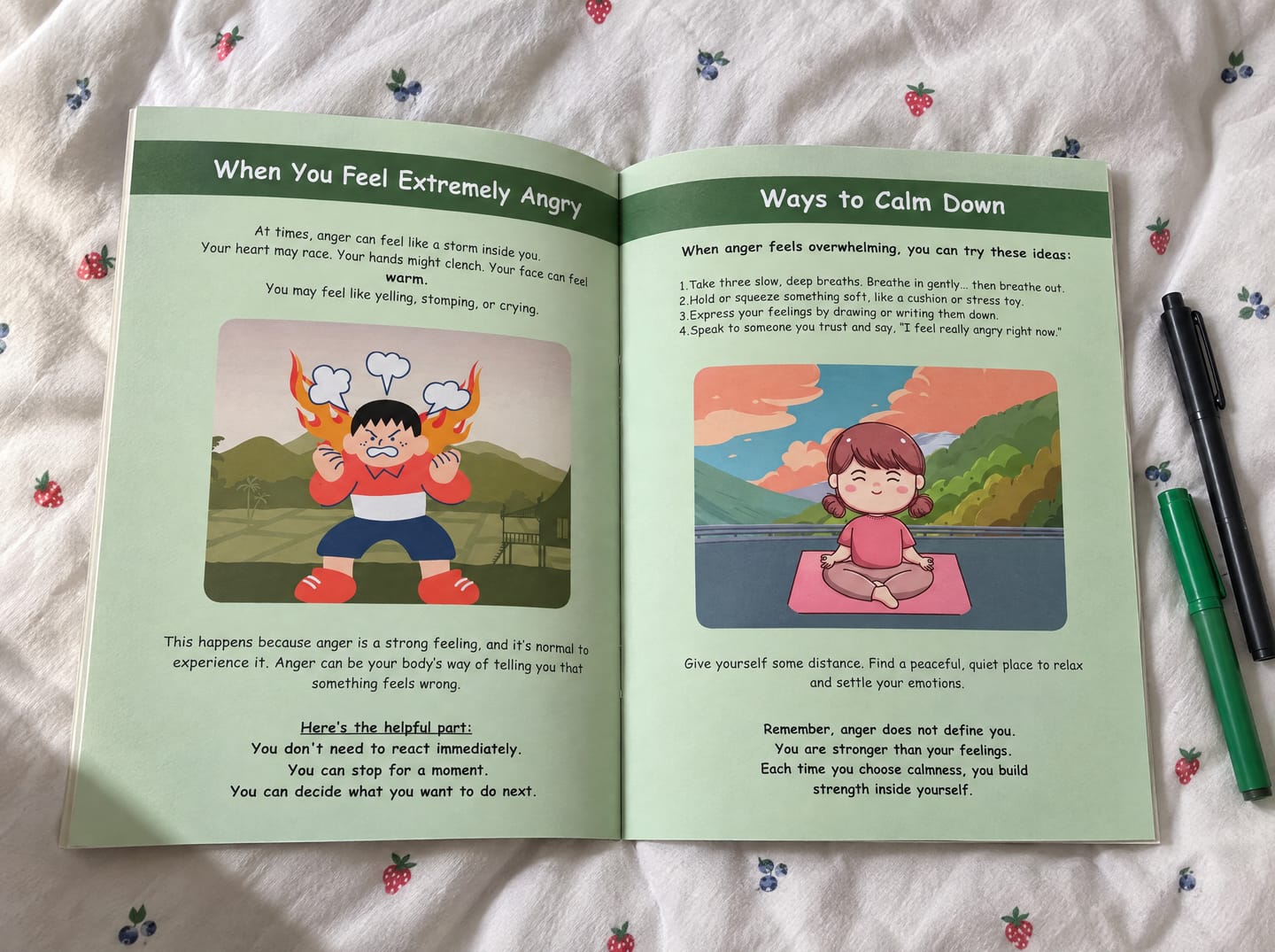
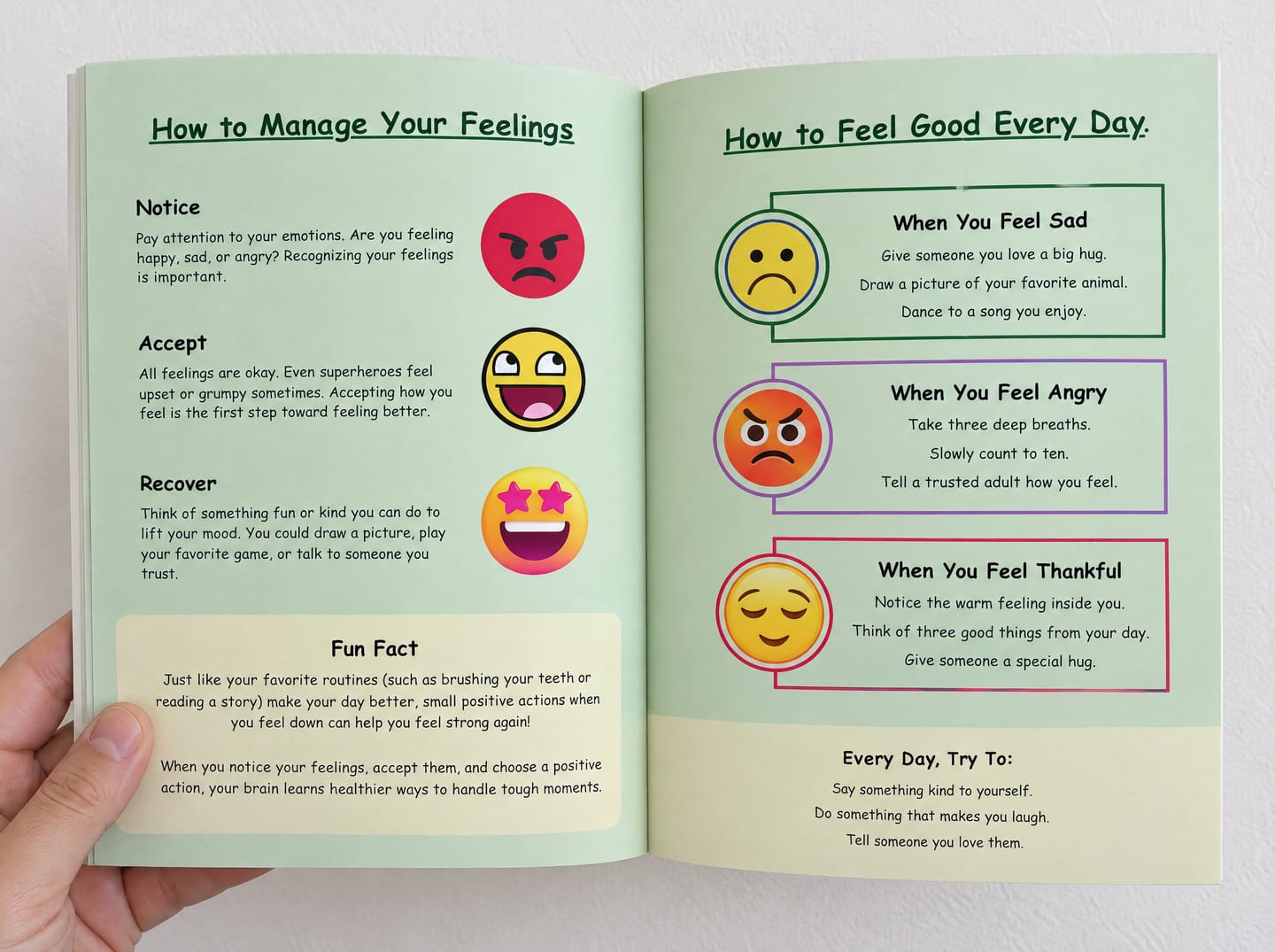
  • Words for feelings. The mood weather chart helps them name big feelings calmly.
  • Gratitude & kind self-talk. Short prompts build a kinder inner voice.
See all 4 research areas

Research summarised for parents; studies were not conducted on the Growlzn journal.

About the journal

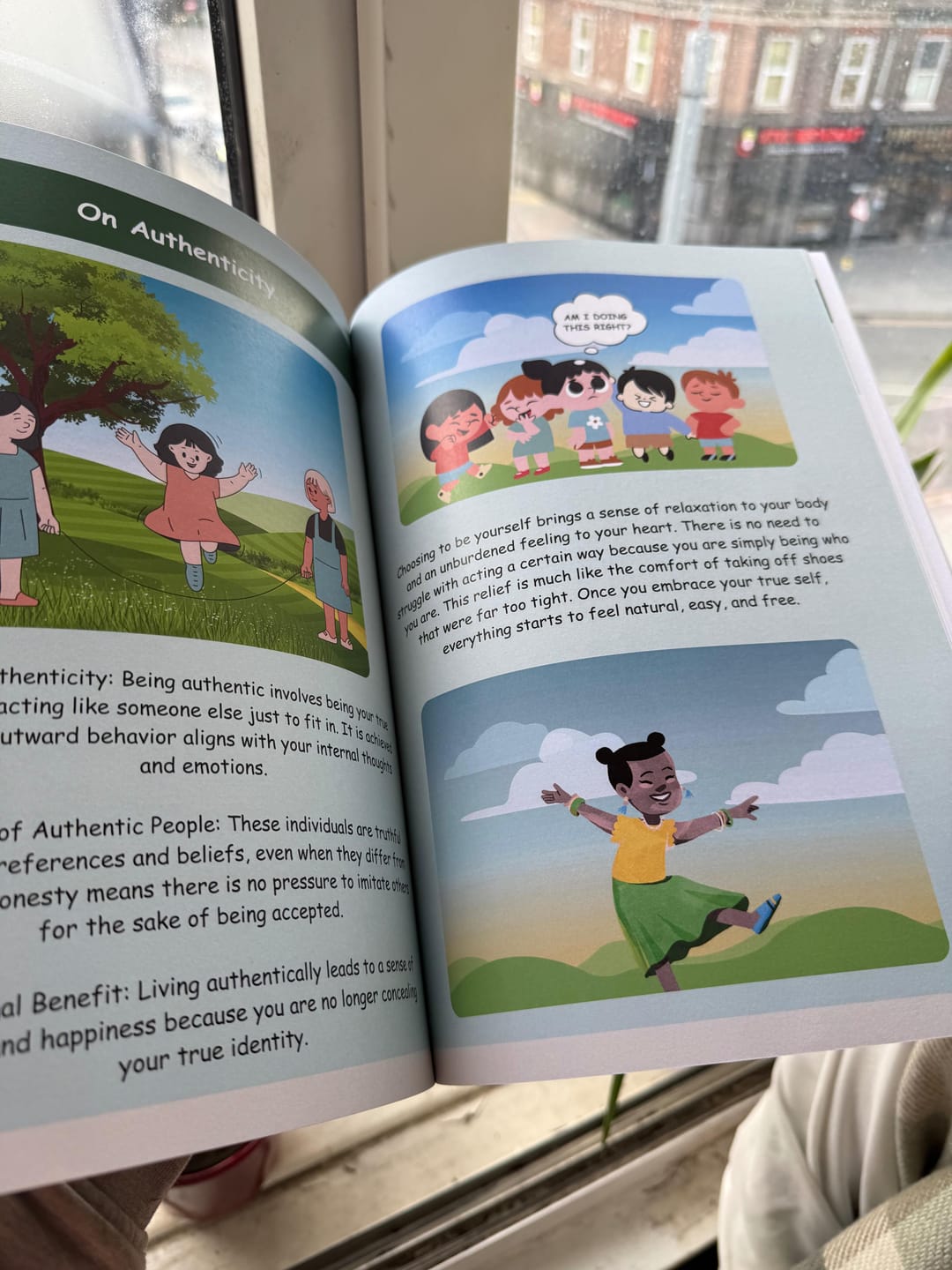
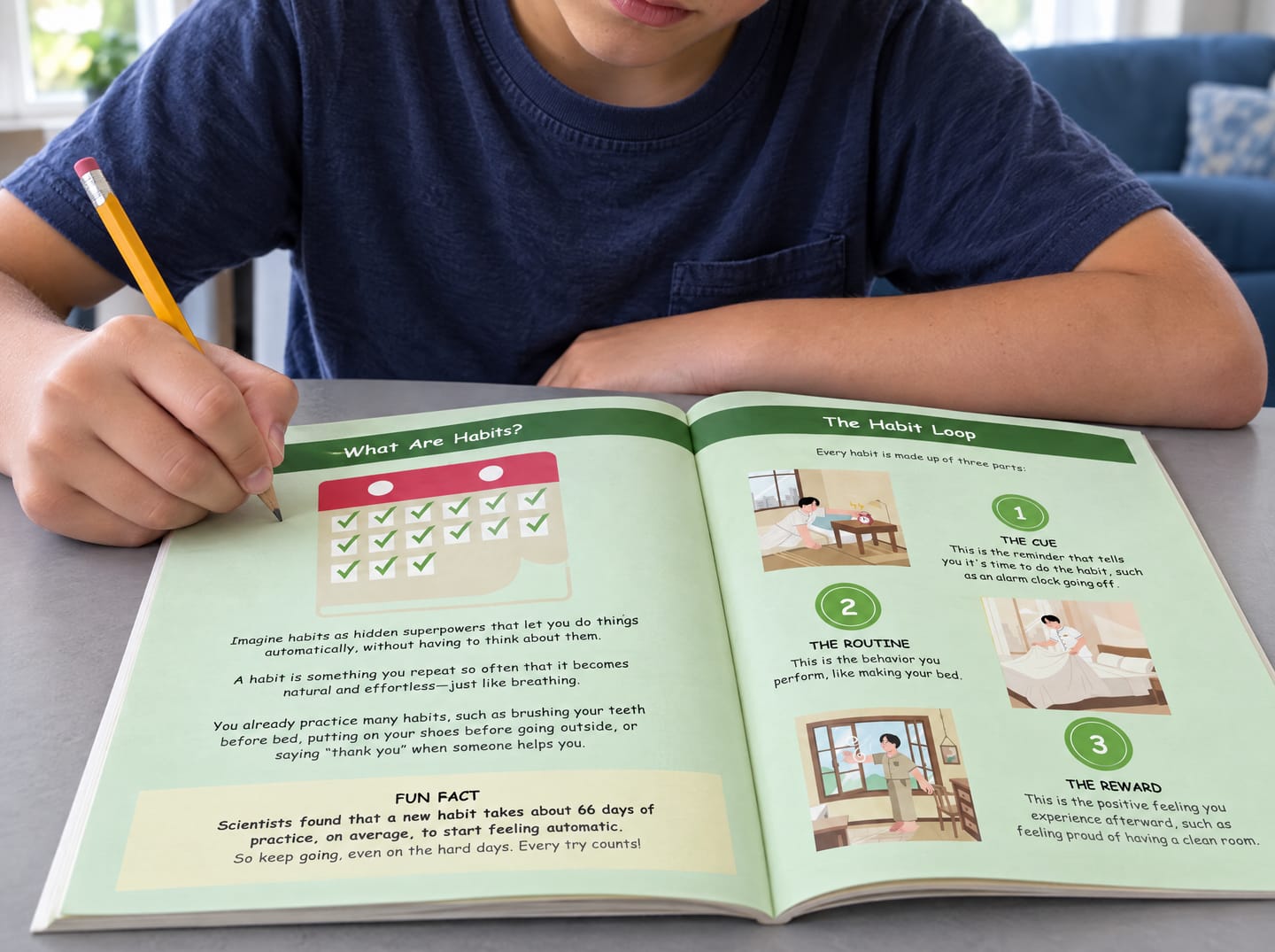
The Growlzn Mindset Journal is a guided activity journal for children aged 6–12. Each page takes about ten minutes and mixes drawing, short prompts and small challenges.

Along the way your child practises naming feelings with the mood ‘weather chart’, speaking to themselves kindly, noticing good things and trying again when something feels hard. Parent tips help you turn a page into a proper conversation.

Delivery & returns
Standard delivery FREE5–6 working days · get it by Thu 12 Nov
FREE
Tracked Express FREE over £89.991–2 working days · get it by Tue 10 Nov
£8.99

Order today, arrives in 5–6 working days · we also ship to the US

30-day returns
  1. Email uscontact@growlzn.com within 30 days of delivery
  2. We reply fastA real person sends return instructions
  3. Get your refundOnce the unused item is back with us

See our refund policy for full details.

The Mindset Journal£29.99FREE gifts · FREE UK delivery
30-day returnsEasy returns on unused itemsFREE UK deliveryDelivered in 5–6 working days10 minutes a dayNo prep neededAges 6–12Made for primary yearsFREE giftsWith every journal30-day returnsEasy returns on unused itemsFREE UK deliveryDelivered in 5–6 working days10 minutes a dayNo prep neededAges 6–12Made for primary yearsFREE giftsWith every journal

As seen in…

Why 644+ Parents Love Mindset This Autumn 🍂

★★★★★Photo from Hira K.'s review

“much kinder to herself and more willing to give things a go”

Got this journal for my daughter as she struggled with confidence in maths and trying new things. After just 3 weeks of journaling together, she’s already become much kinder to herself and more willing to give things a go.

Hira K.Reviewed April 2026
★★★★★Photo from Sarah M.'s review

“my 8-year-old's confidence was unrecognisable”

I've never seen something work this well before. We picked it up at the start of summer break and by the time school started, my 8-year-old's confidence was unrecognisable.

Sarah M.Reviewed October 2026
★★★★★Photo from Noah P.'s review

“all my kids sit together and talk about the prompts”

Got the family bundle and now all my kids sit together and talk about the prompts. I've definitely noticed positive changes! More confident for sure :)

Noah P.Reviewed October 2026
★★★★★Photo from Oliver B.'s review

“part of our bedtime routine”

We’ve started using the Growlzn Mindset Journal as part of our bedtime routine. It gives us a nice way to talk about the day together.

Oliver B.Reviewed October 2026
★★★★★Photo from Tania A.'s review

“The intention page is amazing honestly”

The intention page is amazing honestly. Its really good for getting my son to be more purposeful instead of just going through the motions everyday

Tania A.Reviewed October 2026
★★★★★Photo from Sophie M.'s review

“She writes things down that she can't say out loud yet”

I bought this for my 8 year old daughter after we lost her grandad. She struggled to talk about her feelings and I thought this would help her process everything in her own way. This journal has been so helpful for her. She writes things down that she can't say out loud yet and it's opened up conversations between us. Beautiful book and worth every penny. Thank you

Sophie M.Reviewed October 2026

Real reviews from Growlzn customers, collected by Loox.

Why ages 6–12

The years your child decides “Am I good enough?”

Every stage of childhood matters. Here's why the primary years are such a good time to build confidence habits.

  1. Age0–2

    Building trust

    Bonding, senses and first words lay the foundations.

  2. Age2–6

    Learning through play

    Imagination runs wild as children soak up words and routines.

  3. Age6–12

    Sweet spot Forming the inner voice

    Self-image and self-talk take shape, and habits started now tend to stick.

  4. Age12+

    Finding independence

    Identity is tested, and long-held beliefs take more effort to shift.

Ages 6–12

The sweet spot for confidence habits

Somewhere around seven, a new voice appears. “I’m the slow one.” “I’m rubbish at drawing.” Children start describing themselves, and comparing.⁵

The good news? That voice is still being written. Their brains keep building and pruning connections right into the teens,⁶ so what they practise now tends to stick.

Ten minutes, a few times a week: name a feeling, try again, spot one good thing. Small, repeated, and theirs to keep.

Start their journal
Self-talk formsComparing with friends beginsHabits stick

10 minutes a day

Help your child believe in themselves

Tired mum resting her head on her hand while her bored son is stuck on his homework Before
Before: Rushed evenings, homework battles, and a child who says “I can’t” before they’ve even tried.
The same boy smiling as he writes in the Growlzn Mindset journal After
After: 10 calm minutes a day with the journal. Big feelings get a name, and “I can’t” slowly becomes “I’ll try”.
  • 10 min a day, no prep needed
  • 6–12 years: the ages it's written for
  • 30 days easy returns on unused items
  • 0 screens or subscriptions
Start tonight with the journal

Every child is different. It’s a gentle daily habit, not a miracle cure, and you have 30 days to return unused journals.

Inside the journal

7 missions, ten minutes a day

From “Meet your Feelings Team” to “Your Big Dream”, every page is a short guided activity your child can finish before bed.

Meet your Feelings TeamHappiness, worry, anger, calm and more
Kind self-talk“I can’t” → “I can’t do it yet”
Gratitude missionNoticing the good, every day
Set an intention“By the end of this journal, I want to…”
Growlzn journal7 missions
You + your childOne gentle chat per page
A kinder, braver inner voiceThe confidence to say “I’ll try”

Start tonight

Grounded in research

The ideas behind every page

Each prompt is built around a habit that child-development research links to confidence and wellbeing.

24studies & sources
14research journals
1997–2026years of research
See all 24 sources ↓

Children who learn that abilities grow with effort tend to stick with challenges for longer. Our missions celebrate effort, not just getting it right.1

Putting a feeling into words can take the edge off it. The mood ‘weather chart’ gives children an easy way to say how they feel.2

Noticing small good things each day has been linked to more optimism in young people. A quick daily prompt helps the habit stick.3

Talking to yourself like a supportive friend can help under pressure. Prompts help children swap “I can't” for “I'm still learning”.4

These studies look at the general techniques used in the journal, not at the Growlzn journal itself. Tap any study to read the original paper.

Ten quiet minutes, every day

Ideas for fitting it into after school and bedtime.

Start their journal

Rated 4.8/5 from 644 reviews

G @growlzn
Ten quiet minutes after school ✏️
N Neha H.★★★★★ Verified Loox review

My son loves the thought jar bit.

He writes all his worries in there and says it helps get them out of his head

G GrowlznParents ask us

💚💛

Hi! Is it OK for a 6 year old?

Yes 😊 For 6–7s, read the prompts together

They draw, you chat. About 10 mins

G @growlzn
Our new bedtime chat ritual 🌙
G Growlznonline · Parents ask us

Hi! Do you deliver to the US? 🇺🇸

We do! US delivery takes 4–9 business days 📦

Here’s a peek inside 👀

The Feelings Team pages are a favourite 💛

E Ethan B.★★★★★ Verified Loox review

My child enjoys writing down what’s on their mind.

The journal makes it easier to start conversations about feelings.

G @growlzn
Tablets down, journals out
G GrowlznParents ask us

My son hates writing 😩 will this work?

It's made for that!

Most pages are drawing, colouring and one-liners 🎨

It feels like play, not homework

G Growlznonline · Parents ask us

I have 3 kids 🙈 is there a bundle?

Yes! The family set 👨‍👩‍👧‍👦

Buy 3 and the Big Feelings Toolkit, Parent Guide and Complete Kit are FREE 🎁

G @growlzn
Thinking it through, one page at a time
T Tania A.★★★★★ Verified Loox review

The intention page is amazing honestly.

Its really good for getting my son to be more purposeful instead of just going through the motions everyday

G Growlzngrowlzn · Parents ask us

Saw you on Insta 😍 what age is it for?

Ages 6–12 💚

Little ones do it with you, older kids fly solo

10 minutes a day, no prep 🌱

G @growlzn
Big feelings, gentle chats 💬
G GrowlznParents ask us

How long does it take each day?

About 10 minutes ⏱️

After school or at bedtime works best

No prep, just open and go

G Growlzngrowlzn · Parents ask us

What if she doesn’t get on with it? 🤔

No stress 💚

You’ve got 30 days to return unused items

And UK delivery is FREE

O Oliver B.★★★★★ Verified Loox review

We’ve started using the Growlzn Mindset Journal as part of our bedtime routine.

It gives us a nice way to talk about the day together.

G @growlzn
Ten minutes in the sunshine ☀️
G GrowlznActive now · Parents ask us

Is the Parent Guide a printed book?

It’s a 78-page PDF, emailed instantly 📩

And it’s FREE when you buy 2 journals 🎁

G GrowlznActive now · Parents ask us

If I order today when will it come? 📦

FREE UK delivery takes 5–6 working days 🚚

Your exact date shows above the button

How to use it, by age

One page a day, about 10 minutes. Here's what tends to work at each age.

AgeWhat works best
6–7Little onesRead it togetherThey draw, you chat
8–10Growing independenceSide by sideThey write, you ask one question
11–12Doing it soloOn their ownShare a page at the weekend
Mum and daughter reading the journal at bedtime
Ages 6–7Read it togetherAges 8–10Side by sideAges 11–12On their own

The difference

Why not just an app or a blank diary?

Growlzn compared with Screen apps and Blank diary
What matters Our pickGrowlzn Screen apps Blank diary
Screen-free and calming
Guided daily prompts
Builds a vocabulary for feelings
Growth-mindset missions
Gets parent and child talking
No subscription or app
One for every child

Pick your pack. Gifts included.

Every child gets their own journal. The more you pick, the more free extras you unlock.

1 Journal

1 Journal

Start the habit

£29.99

£29.99 per journal

  • 1 × Mindset Journal
  • Big Feelings Toolkit (PDF) FREE
  • Parent Companion Guide
  • Complete Kit: 5 workbooks
£9.99 of gifts, FREE
Choose 1 journal
Great for siblings
2 Journals

2 Journals

For siblings, or one to gift

£59.98

£29.99 per journal

  • 2 × Mindset Journal
  • Big Feelings Toolkit (PDF) FREE
  • Parent Companion Guide (PDF) FREE
  • Complete Kit: 5 workbooks
£24.98 of gifts, FREE
Choose 2 journals
Best value
The Family Set

The Family Set

3 journals, one for every child

£89.97

£29.99 per journal

  • 3 × Mindset Journal
  • Big Feelings Toolkit (PDF) FREE
  • Parent Companion Guide (PDF) FREE
  • Complete Kit: 5 workbooks (PDF) FREE
£84.97 of gifts, FREE
Choose the family set
FREE UK delivery30-day returnsDigital gifts emailed instantly

Reviews

Customer reviews

4.8from 644 reviews

Questions? Ask away

Can't find your answer? Email contact@growlzn.com.

What age is the journal for?

Children aged 6–12. Younger children enjoy it with a grown-up reading the prompts aloud; older children usually do it on their own.

I’m not an expert. Can I still guide my child?

Yes. Every page explains itself, and parent tips give you one easy question to ask. No training or prep needed.

My child doesn't like writing. Will it work?

Most pages use drawing, colouring and one-line answers, so it suits reluctant writers well.

How long does it take each day?

About 10 minutes. After school or at bedtime both work well.

Do I need to prepare anything?

No. Each page explains itself. Open it, read the prompt and go.

What’s included with each bundle?

1 journal: FREE Big Feelings Toolkit (PDF).
2 journals: FREE Big Feelings Toolkit + FREE Parent Companion Guide (78-page PDF).
3 journals: FREE Toolkit + FREE Parent Guide + FREE Complete Kit (5 printable workbooks).
The free gifts tick automatically and are applied at checkout.

How is it delivered?

UK Standard delivery is FREE (5–6 working days). Tracked Express (1–2 working days) is £8.99 and FREE over £89.99. We also ship to the US: Standard is FREE (4–9 business days) and Express is $8.99 (3–7 business days), FREE over $89.99. The Parent Guide and Complete Kit are instant PDF downloads.

What if it isn't right for my child?

You can return it within 30 days of delivery if it’s unused. Email contact@growlzn.com and we’ll guide you through it (see our refund policy).

Is it a replacement for professional support?

No. It’s an everyday wellbeing journal, not a treatment. If you’re worried about your child, please speak to your GP or school.

  1. 1 Blackwell, L. S., Trzesniewski, K. H. & Dweck, C. S. (2007). Implicit theories of intelligence predict achievement across an adolescent transition: A longitudinal study and an intervention. Child Development, 78(1), 246–263.
  2. 2 Lieberman, M. D. et al. (2007). Putting feelings into words: Affect labeling disrupts amygdala activity in response to affective stimuli. Psychological Science, 18(5), 421–428.
  3. 3 Froh, J. J., Sefick, W. J. & Emmons, R. A. (2008). Counting blessings in early adolescents: An experimental study of gratitude and subjective well-being. Journal of School Psychology, 46(2), 213–233.
  4. 4 Kross, E. et al. (2014). Self-talk as a regulatory mechanism: How you do it matters. Journal of Personality and Social Psychology, 106(2), 304–324.
  5. 5 Harter, S. (2012). The Construction of the Self: Developmental and Sociocultural Foundations (2nd ed.). Guilford Press.
  6. 6 Huttenlocher, P. R. & Dabholkar, A. S. (1997). Regional differences in synaptogenesis in human cerebral cortex. Journal of Comparative Neurology, 387(2), 167–178.
  7. 7 Durlak, J. A. et al. (2011). The impact of enhancing students' social and emotional learning: A meta-analysis of school-based universal interventions. Child Development, 82(1), 405–432.
  8. 8 Yeager, D. S. et al. (2019). A national experiment reveals where a growth mindset improves achievement. Nature, 573(7774), 364–369.
  9. 9 Mueller, C. M. & Dweck, C. S. (1998). Praise for intelligence can undermine children's motivation and performance. Journal of Personality and Social Psychology, 75(1), 33–52.
  10. 10 Pennebaker, J. W. (1997). Writing about emotional experiences as a therapeutic process. Psychological Science, 8(3), 162–166.
  11. 11 Torre, J. B. & Lieberman, M. D. (2018). Putting feelings into words: Affect labeling as implicit emotion regulation. Emotion Review, 10(2), 116–124.
  12. 12 Emmons, R. A. & McCullough, M. E. (2003). Counting blessings versus burdens: An experimental investigation of gratitude and subjective well-being in daily life. Journal of Personality and Social Psychology, 84(2), 377–389.
  13. 13 Hale, L. & Guan, S. (2015). Screen time and sleep among school-aged children and adolescents: A systematic literature review. Sleep Medicine Reviews, 21, 50–58.
  14. 14 Mindell, J. A. & Williamson, A. A. (2018). Benefits of a bedtime routine in young children: Sleep, development, and beyond. Sleep Medicine Reviews, 40, 93–108.
  15. 15 Taylor, R. D. et al. (2017). Promoting positive youth development through school-based social and emotional learning interventions: A meta-analysis of follow-up effects. Child Development, 88(4), 1156–1171.
  16. 16 Eisenberg, N., Spinrad, T. L. & Eggum, N. D. (2010). Emotion-related self-regulation and its relation to children's maladjustment. Annual Review of Clinical Psychology, 6, 495–525.
  17. 17 Moffitt, T. E. et al. (2011). A gradient of childhood self-control predicts health, wealth, and public safety. Proceedings of the National Academy of Sciences, 108(7), 2693–2698.
  18. 18 Drake, J. E. & Winner, E. (2013). How children use drawing to regulate their emotions. Cognition and Emotion, 27, 512–520.
  19. 19 Brummelman, E. et al. (2014). “That's not just beautiful—that's incredibly beautiful!”: The adverse impact of inflated praise on children with low self-esteem. Psychological Science, 25(3), 728–735.
  20. 20 Schonert-Reichl, K. A. et al. (2015). Enhancing cognitive and social–emotional development through a simple-to-administer mindfulness-based school program for elementary school children: A randomized controlled trial. Developmental Psychology, 51(1), 52–66.
  21. 21 Burnette, J. L. et al. (2023). A systematic review and meta-analysis of growth mindset interventions: For whom, how, and why might such interventions work? Psychological Bulletin, 149(3–4), 174–205.
  22. 22 Cipriano, C. et al. (2023). The state of evidence for social and emotional learning: A contemporary meta-analysis of universal school-based SEL interventions. Child Development, 94(5), 1181–1204.
  23. 23 Bluth, K. et al. (2024). Feasibility, acceptability, and depression outcomes of a randomized controlled trial of Mindful Self-Compassion for Teens (MSC-T) for adolescents with subsyndromal depression. Journal of Adolescence, 96(2), 322–336.
  24. 24 Zhu, C. et al. (2026). Labeling it makes you feel better: The role of affect labeling on emotion regulation among Chinese preschoolers. Child Development, 97(2), 451–464.
  25. These studies look at the general techniques used in the journal. They were not carried out on the Growlzn journal itself.

The Growlzn journal is an educational activity book. It is not a substitute for professional advice. If you are worried about your child's wellbeing, please speak to your GP or school.